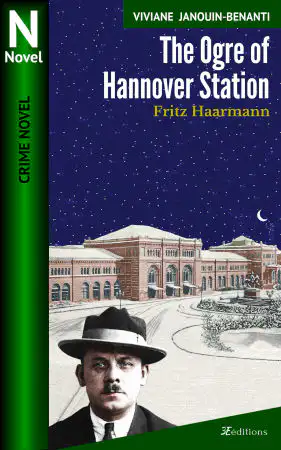
Ogre of Hannover book cover
Crime Novel

Viviane Janouin-Benanti

The Ogre of Hannover Station

Fritz Haarmann

He looked like authority. The monster no one saw.

Picture this: Hannover, 1920s. A city staggering out of war, pockets empty, lights dim, the train station beating like a tired heart. Boys drift in with rain on their coats and hope in their eyes. One man is always watching.

Viviane Janouin-Benanti’s The Ogre of Hannover Station: Fritz Haarmann isn’t just a true-crime story—it’s a razor-edged thriller wearing the cool gaze of history. The hook is simple and chilling: a petty crook with a policeman’s swagger turns the station into his hunting ground, hiding in plain sight while the city looks the other way. Informant by day, predator by night. A lover who’s trouble. A police chief who keeps telling himself the station is just the station—until the river starts giving back its secrets.

Viviane Janouin-Benanti builds suspense the way a conductor builds a crescendo: short, breath-catching chapters; recurring scenes at the platforms where departures are promises and goodbyes are permanent; families stepping into stark offices with a photo and a prayer. She doesn’t wallow in gore. She tightens the frame—on a hat on a peg, a new suit in a shop window, a name spoken too softly. The dread is earned, not shouted.

And then the investigation hits. Doors splinter. Rooms are searched. Evidence piles up like a storm cloud finally breaking. The city wakes. Courtroom theater follows—swagger, contradictions, a spotlight that makes the guilty preen and the grieving flinch. You’ll turn pages faster than a departure board flips.

Why this book, and why now? Because it’s about more than one monster. It’s about the small permissions we grant, the shortcuts we excuse, the uniforms we trust without blinking. It’s about how hunger and chaos make some people vanish and other people invisible. It’s about what it takes to see—really see—what’s been there all along.

If you crave the propulsion of a crime novel but want the spine of real history, this is your next read. Come for the station’s murmur and the noir-slick streets; stay for the meticulous unraveling, the moral clarity, the startling humanity. The Ogre of Hannover Station will keep you up late and leave you staring into the dark, listening for footsteps on tile. Turn the first page—and don’t plan on stopping.
Availability

Buy the book

Direct access to the major sales platforms.

Some photos from the book

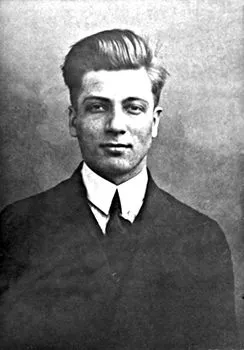
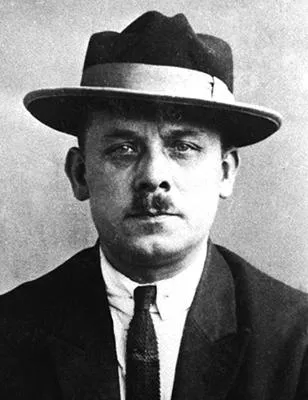
Friedrich Haarmann
Friedrich, called Fritz, Haarmann
Magasin de Fritz Haarmann
Fritz Haarmann's clothing store
Appartement d'Haarmann
Haarmann's pantry
where he stored human meat
before selling it
Hans Grans
Hans Grans,
Haarmann's lover and accomplice
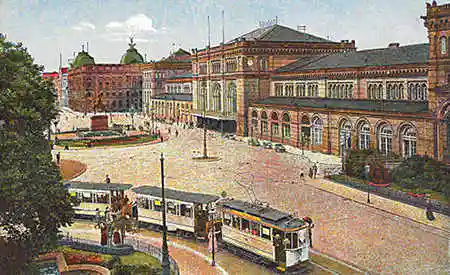
Gare d'Hanovre
Hannover railway station
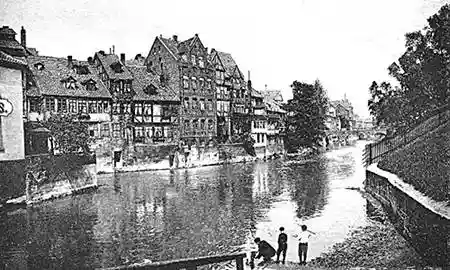
La Leine
Leine River
Fritz Haarmann
Fritz Haarmann
happy to pose for posterity
Fritz Haarmann
Fritz Haarmann
leaving the court after the verdict

Book Reviews

In Hannover of the post-war period of 14-18, the police were disorganized and the crisis was raging. The circumstances was propitious to a serial killer. Not just any one, this one, a pedophile, attacks boys and teenagers. Between 1918 and 1924, reports of worrying disappearances rise dramatically. Commissioner Retz admits his powerlessness.

Friedrich Haarmann was mainly active from 1918 to 1924, without the number of his victims being really known. There will be no bodies, only a mountain of anonymous bones in the Leine River. At the very least, Haarmann will be forced to confess to 27 murders during his trial.

Viviane Janouin-Benanti has accustomed us to handle her criminal cases with sensitivity and restraint. She never enters into the sordid, seeking rather to dissect the personality of the protagonists. However, it must be admitted that for this sadistic killer who sold human flesh on the black market, you have to have a strong heart to follow his sordid path. In this sense, it is one of the darkest novels we have ever read.

Fortunately, despite the horror of the facts, the author's clear and alert style leads us in confidence and security to the conclusion of the investigation and the atonement of the monster.

CDL 44, february 2019.

Viviane Janouin-Benanti opens not with a gruesome tableau but with a boy at a table, embroidering alongside his mother; from the start she frames Fritz Haarmann within a household where devotion and dysfunction coil together. The portrait is unsettling: a son cherished to the point of complicity, a father he’s taught to despise, and a childhood already bending toward predation as the cellar of the apartment building becomes his private hunting ground. The scenes are lean and sober, designed to unsettle because they feel ordinary—thin walls, neighbors passing in the stairwell, a mother who looks the other way.

Will you want to read it?
That depends on your threshold. The author promises not to dwell on the sordid, and she keeps that promise, but she does not euphemize the crimes or their aftermath. Readers sensitive to depictions of violence against minors should know that while scenes are written with restraint, they are still harrowing. The payoff is understanding: you come away seeing how a predator’s ordinary mask can be made, how institutions can be softened by gifts and small favors, and how a city can learn to hear the station’s hum as background noise until the river itself starts talking.

The Ogre of Hannover Station is both gripping and careful, an unusually humane entry in a genre that often confuses cruelty with candor. Viviane Janouin-Benanti’s gift is perspective: she sees the killer clearly, but she refuses to let him eclipse the parents who search, the boys who make one small wrong choice in a dark week, and the officials who find a hundred reasons not to act.
You close the book not with prurient satisfaction, but with a sharper sense of how such a story becomes possible, and what it takes to stop it. Highly recommended, with the caveat that its restraint is moral, not anesthetic: the pain is real, and the author honors it.

The marina books lovers

This chilling story has been impeccably researched and tactfully dramatized by Viviane Janouin-Benanti, the author of over twenty captivating historical true crime novels. In telling this story, Janouin-Benanti does not glorify the sordid details of this serial killer’s crimes. She tells us the facts and names his victims, sharing their tragic stories as well.

The True Crime French Touch, the 3E Editions blog

Other Books to Discover

You might also like:

View all collections →