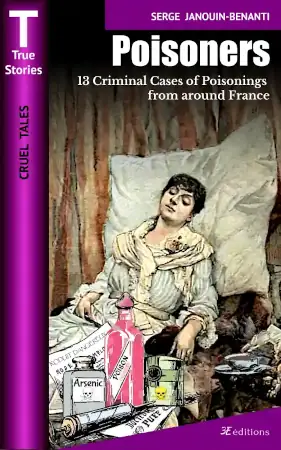
Poisoners book cover
Cruel Tales

Serge Janouin-Benanti

Poisoners

13 Criminal Cases of Poisonings from around France

Thirteen crimes. One invisible weapon.

France, 1828–1900. Thirteen crimes. One invisible weapon.

Welcome to Poisoners — 13 Criminal Cases of Poisonings from around France, a true-crime road movie on the page. Every chapter is a new town, a new suspect, a new teaspoon of doom.

Step into Marseille, where a fortune-teller and an herbalist sell “harmless” powders by the pinch—until a doctor’s test explodes and the police kick in a door to find a sorcerer’s pantry of arsenic. Jump to Tarbes, where four glossy chocolate “princes” arrive by post; one bite later, a postman is dead and a schoolmaster swears it was only “saltpeter.” Cross into Antwerp, where a diamond-district socialite smiles through a marathon trial as 296 witnesses line up to say the unsayable.

Then the collection goes darker.

In “Honey Bear and Turtle Dove,” two lovers whisper pet names while a wife dies in the next room—and the plan only grows bolder. “Sentenced to Death by Persuasion” loads arsenic into eleven pastries and hires street kids as couriers; the icing sugar is a lie. “I’m Going to Kill You All!” turns a bakery into a citywide crime scene. “Old People” is a single, sickening monologue from a man who poisons a tableful of neighbors—and can’t explain why. “Nothing to Understand?” ends on a government report with one stubborn anomaly: a young woman condemned to die, then acquitted, and the minister who quietly erases the outlier because it won’t fit the numbers.

You’ll meet quack remedies like theriac—sixty-nine ingredients and zero salvation—alongside the new science that finally sees the unseen: Orfila’s toxicology, Marsh’s arsenic test, exhumations that make the dead speak. Courtrooms become theaters. Crowds cheer and jeer. Defendants play to the gallery, and the gallery plays judge.

What makes it irresistible isn’t just the poisons—it’s the motives. Lust dressed as devotion. Pride posing as science. Debt wearing a smile. Serge Janouin-Benanti gives you scenes that snap, details that stick (a cherry on a cake; a street address; a paper cone of white), and verdicts that land like gongs.

Short, sharp, and shamelessly addictive, Poisoners is thirteen hits of historical noir you can devour in a night—and keep tasting for weeks. Pour a coffee. Trust no sugar. Turn the page.
Availability

Buy the book

Direct access to the major sales platforms.

Some photos from the book

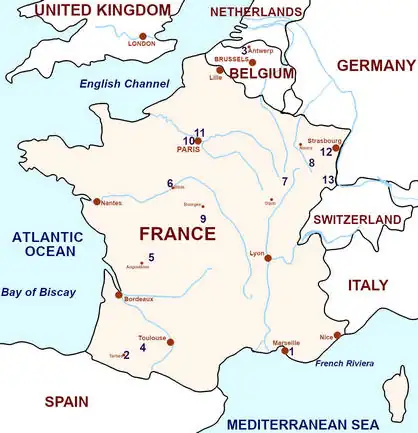
Map of the Crimes
Map of the Crimes
Joye l'herboriste
The herbalist Joye
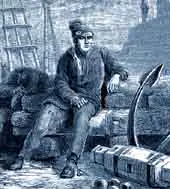
Joye forçat
The convict Joye
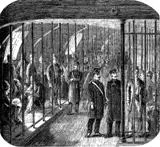
Voyage vers la Guyane
In the boat leaving for Guyana
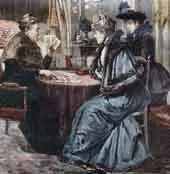
Les empoisonneuses de Marseille
The fortune teller (poisoners of Marseille)
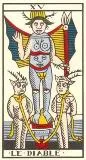
Tarot Diable
Arcanus of the Tarot: The Devil
Tarot, mort
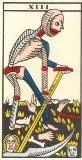
Arcanus of the Tarot: Death
Appareil de Marsh
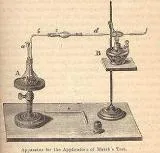
Marsh's device to detect arsenic
Pharmacien Blanc
Blanc, the pharmacist of Blois
Leborre
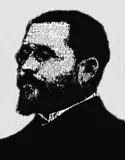
Leborre
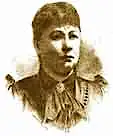
Jeanne Gilbert
Jeanne Gilbert
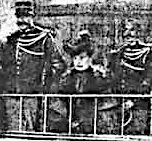
Procès Jeanne Gilbert
Jeanne Gilbert trial
Joniaux
Joniaux
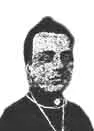
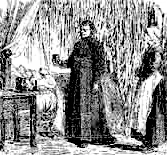
Curé Gothland
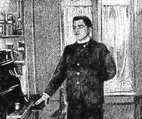
The priest Gothland
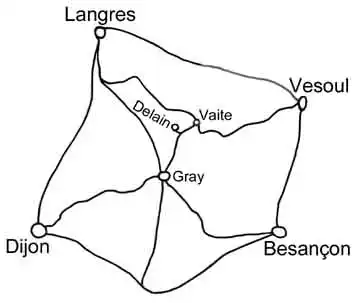
Gray Langres Vesoul Dijon
Map of places: Gray, Langres
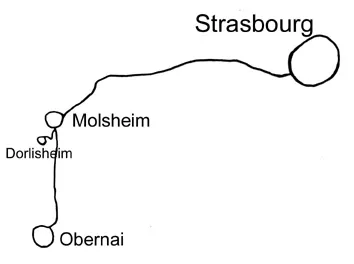
Nord Alsace
Map of the north of Alsace
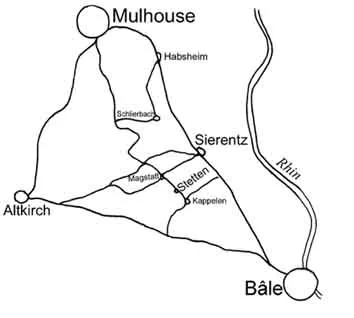
Sud  Alsace
Map of the south of Alsace

Book Reviews

A genuine tour through France one poison apple at a time. In short, a delight!

From the occasional poisoner pushed over the edge to the organization of murderous women in Marseille, no case is too much. […]

A beautiful gallery of diverse and contrasting portraits, a riveting journey into France's crime scene. Bravo, as always, to Serge Janouin-Benanti.

Delphine Cingal, Au four et à Melun, April 9, 2011

Through these stories, you will discover the many riches Serge Janouin-Benanti delivers us, and which are his specialty.

The author explores the psychology of the characters... This kind of work is a bottomless pit from which authors of detective novels can draw ideas to develop to their hearts' content.

Paul Maugendre, Les lectures de l'oncle Paul and Rayon Polar, January 27, 2012

A “map of the crimes” lists the thirteen tales and their waypoints—from Marseille to Tarbes, Antwerp to the rural Astarac—promising both variety and a slow, cumulative portrait of nineteenth-century life under the shadow of easy-to-buy toxins. The volume foregrounds that these stories are inspired by true events, and it includes an “About the Author/Translator” note that situates Serge Janouin-Benanti’s scientific background and Boatwright’s literary competence. That blend—method and narrative—gives the book its snap: every scene swings like fiction, every conclusion rests on filings, testimonies, and autopsies.

If you devour true-crime podcasts, love historical mysteries, or want a smart companion to nineteenth-century French life beyond Balzac and Zola, this is an easy recommendation. Read it in order to watch the forensic and legal threads knit tighter, or out of order as thirteen compact shocks. Either way, it invites reflection. Consider how often money sits at the center (annuities, insurance, shop revenues), how often reputation constrains action (the shame of brothels, the pride of pharmacists), and how frequently collective feeling—a jeering crowd, a pleading petition—reshapes justice’s trajectory. The case of Baude in Saint-Denis (doomed, then saved) and the Boeglin footnote (a life flipped between two verdicts, then politely erased) offer mirror images of that social power.

It’s the rare true-crime collection that rewards curiosity as much as it gratifies it—one that trusts readers to connect the dots between lab glass, love letters, and the human hunger for both justice and spectacle. If that sounds like your blend, clear an evening: these thirteen doses are potent.

The marina books lovers

Other Books to Discover

You might also like:

View all collections →